

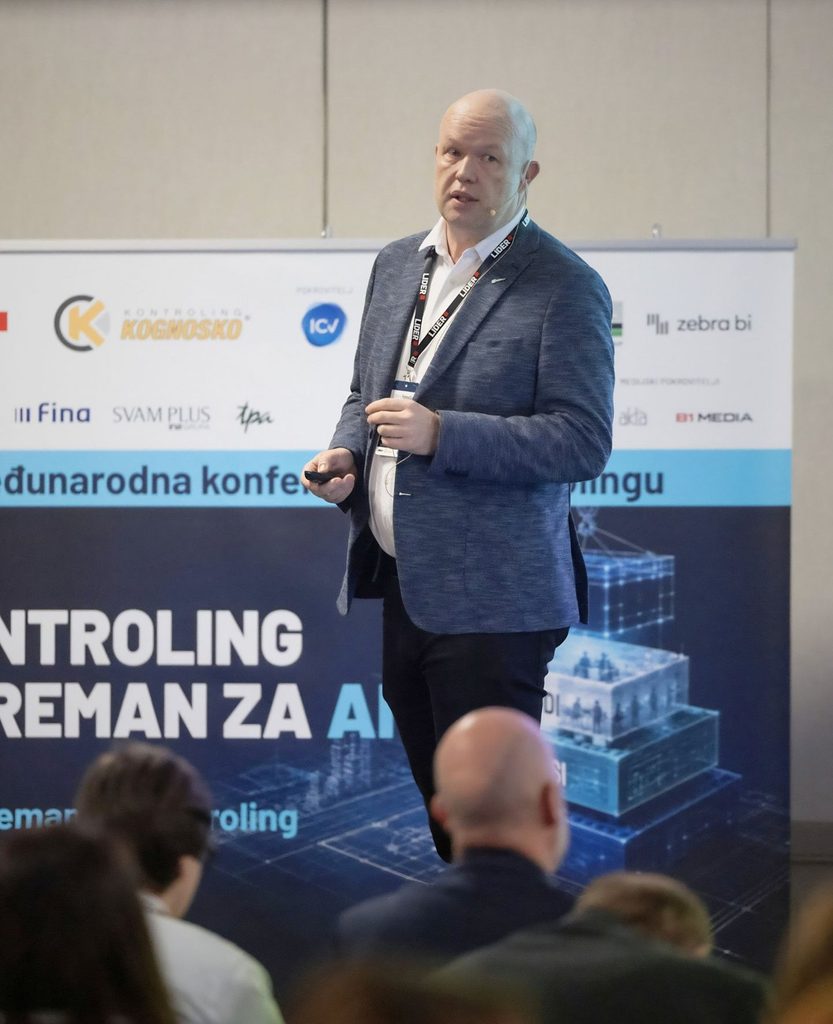
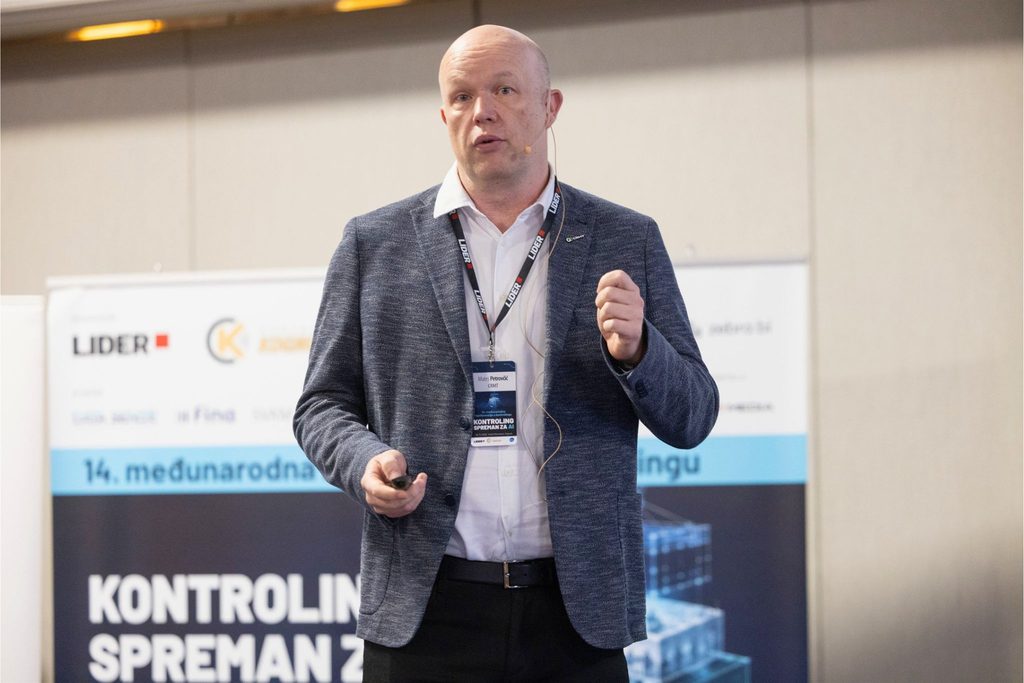
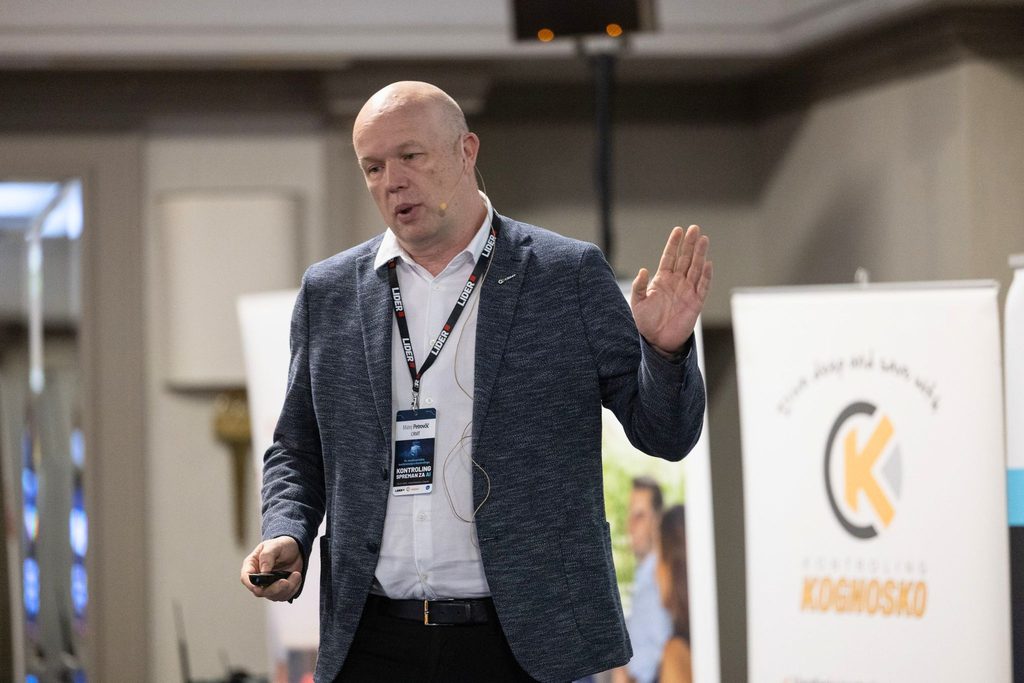
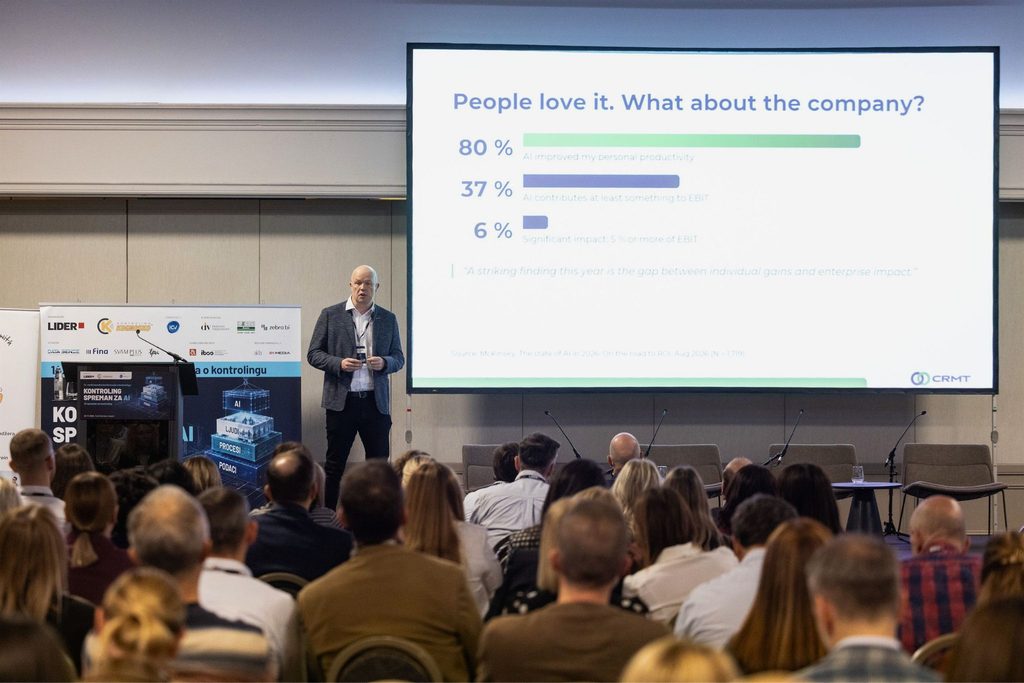
On Friday, 20 November 2026, the Sheraton Hotel in Zagreb hosted the 14th International Controlling Conference in Croatia (ICCC). The conference is organized by Kontroling Kognosko and Lider media under the patronage of the International Association of Controllers (ICV (Internationaler Controller Verein). This year’s edition, titled “Controlling Ready for AI“, brought together around 330 participants and speakers from Germany, Norway, Poland, Slovenia, Bosnia and Herzegovina, and Croatia. Among them was Matej Petrovčič, Co-founder and CEO of CRMT, who spoke on “AI in Controlling: Between Promise and Delivery“.
Why technology alone is not enough
AI is now part of business strategy almost everywhere. Yet there is still a wide gap between stated ambitions and actual financial results. Drawing on CRMT’s project experience with finance and controlling teams, Matej explained why the journey from proof of concept to reliable day-to-day use is harder than it looks.
The bottleneck is often not AI itself but the data. According to the FP&A Trends Survey 2026, FP&A teams spend 47% of their time collecting and validating data. Controlling acts as the organization’s navigator, helping it execute its strategy. To do that well, controllers need time and data they can trust. AI can deliver both at three levels. It takes over repetitive work, makes everyday tasks faster and better, and enables analyses and forecasts that were previously infeasible.
From assistant to digital co-worker
Matej outlined a step-by-step adoption path. It starts with everyday use of an AI assistant, for example in Excel to check, clean, and analyze data. The next step is asking questions in plain language, such as “Which receivables are more than 60 days overdue?”, with AI answering directly from the business system rather than relying on its general knowledge. Then come repeatable reports built to a common standard such as IBCS, along with forecasts like next month’s cash flow. At the end of the path is a digital co-worker that prepares work on its own, for example matching payments to invoices or sending a receivables overview every Monday morning, while the controller reviews and approves it.
Each step gives AI more autonomy and creates more value. At the same time, the need for trusted data grows.
Four lessons from real projects
- Build once, run every month. Instead of having AI rebuild the report every month, each time with a slightly different layout, let it build a tool once, such as a template, a skill, or a dashboard. From then on, only the data is refreshed.
- The same numbers in every tool. AI should draw its data from the semantic layer, not directly from the database or from exports. The semantic layer defines key business terms such as revenue, margin, or overdue receivables once, and in the same way for everyone. As a result, an AI agent shows the same numbers as reports in Power BI or Excel. AI simply becomes another way of accessing the same validated data used by every other tool.
- Read-only first. AI reads data and prepares drafts, while posting, payments, and sending stay with people. For example, the agent drafts a payment reminder, and the controller sends it.
- Start with one routine process. Pick a repetitive task where you can clearly measure how long it takes today and how long it takes after AI is introduced. Matching payments to invoices is a good example.
The key message of the talk was that AI does not replace the controller. It removes the work that has kept the controller from acting as the navigator.
Sharing experience and continuing the conversation
The conference offered plenty of opportunities to discuss how to prepare controlling for its next stage of development without losing control over data and decision quality. Jan Markun, head of Šola kontrolinga, also attended the conference and was available to participants for conversations and the exchange of experience.
Would you like to explore how AI and trusted data could work in your controlling function? Get in touch, or contact Matej Petrovčič or Jan Markun directly. We look forward to continuing the conversation.
Read more
Beyond Historical Concepts: Building a Future-Ready Controlling Function
Insights from the Adriatic Controlling Conference We continue our blog series highlighting the standout sessions from this year’s Adriatic Controlling Con...
Read moreFrom Reactive Reporting to Proactive Controlling: Lessons from Zavarovalnica Sava
Insights from the 21st Adriatik Controlling Conference At this year’s 21st Adriatik Controlling Conference, dedicated to the modernization of controlling,...
Read more