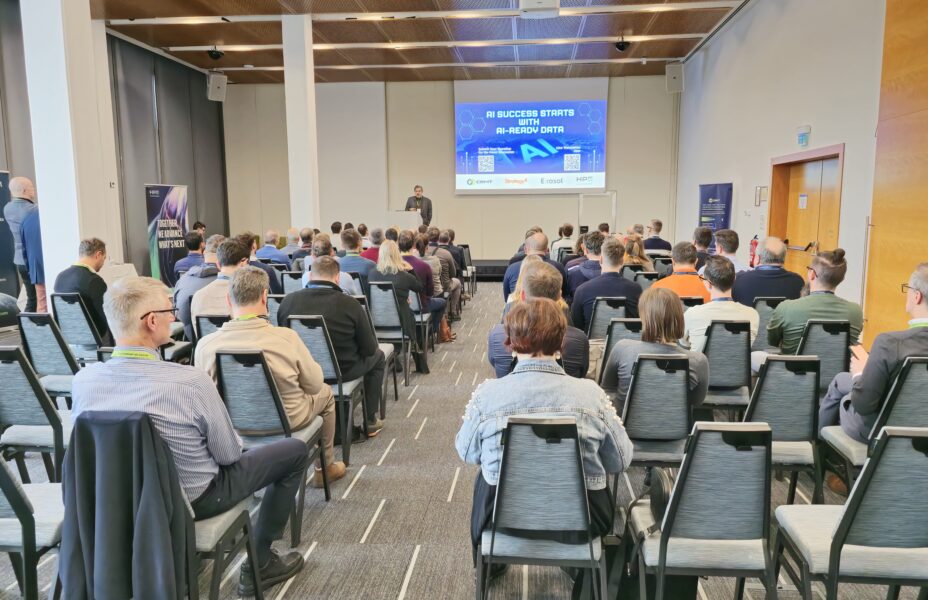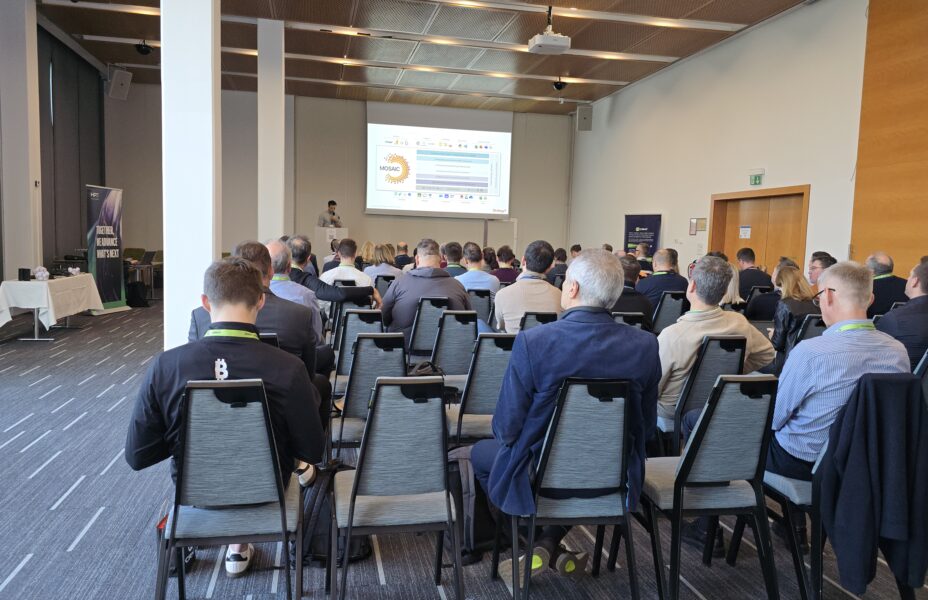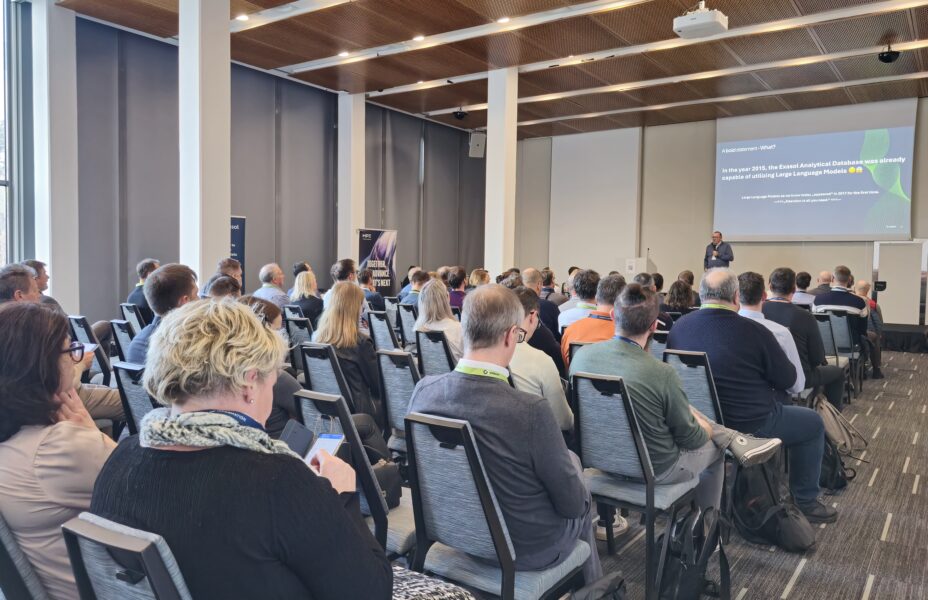

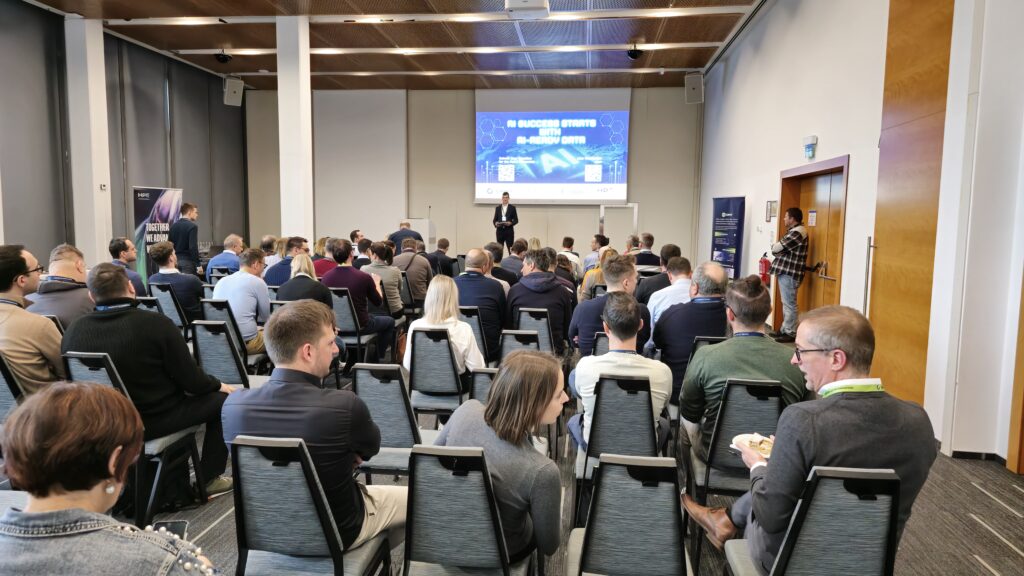
In CRMT, we closed the year with a standout event that perfectly aligned with today’s technology landscape. AI Success Starts with AI-Ready Data gathered experts and decision-makers to explore one of the most critical topics shaping modern business: how to ensure that the data powering AI initiatives is adequately prepared, governed, and ready for scale.
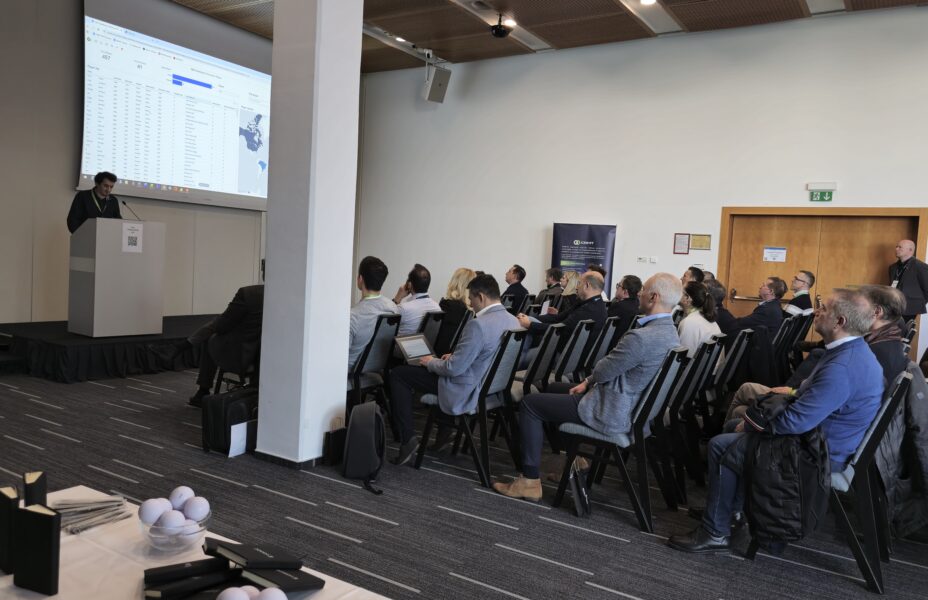
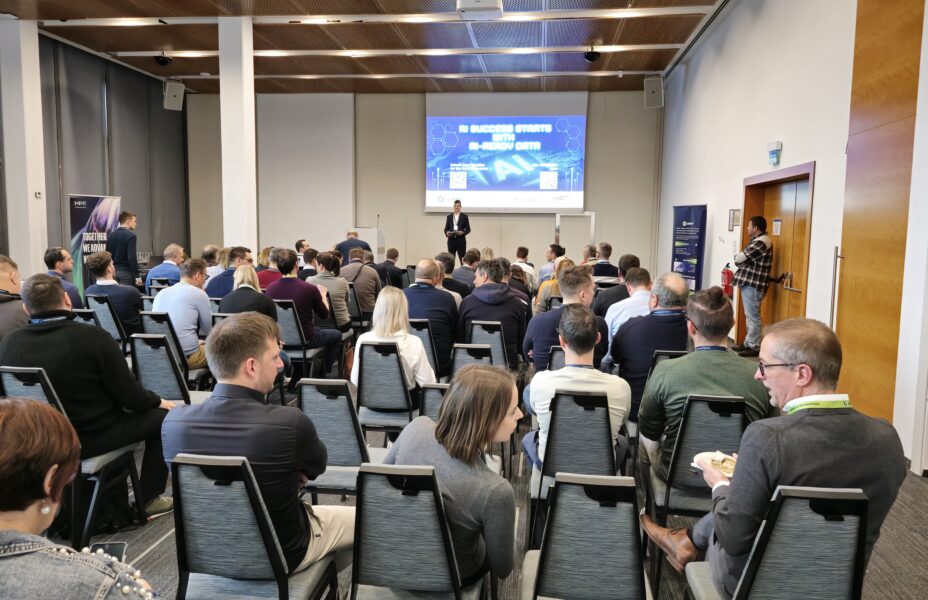
Held at the Four Points by Sheraton Ljubljana Mons, the event drew attendees from more than 40 companies. The program focused on practical approaches and solutions that help organisations move from isolated AI experiments to reliable, verifiable, and cost-effective projects built on strong data foundations.
The speaker lineup brought a mix of strategic insights and hands-on perspectives:
- Slavko Kastelic (CRMT) unpacked the hidden risks of generative and agentic AI and highlighted why architecture is the backbone of trust and control.
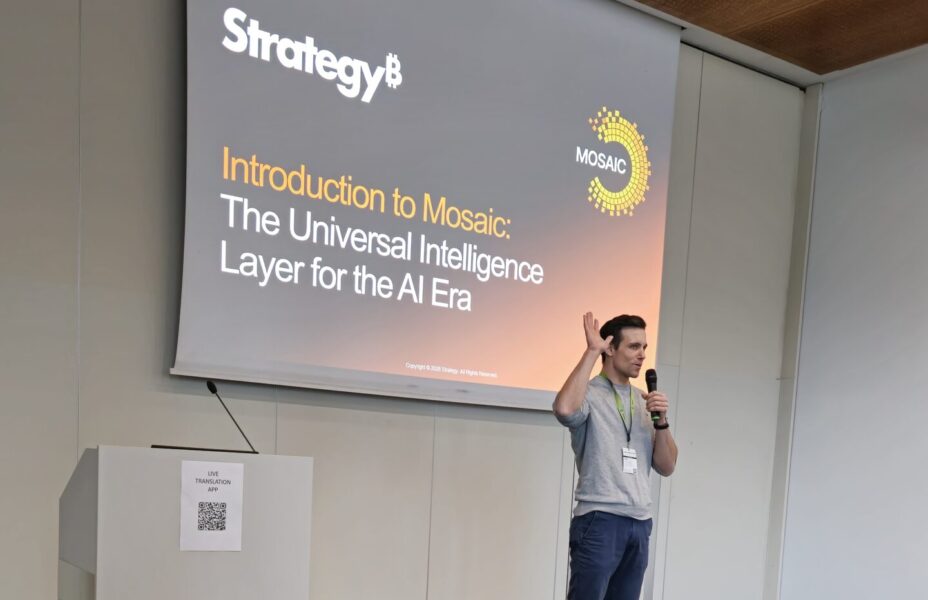
- Lukas Zimmermann (Strategy) showcased how Strategy Mosaic and Strategy One support organisations in building enterprise intelligence in the age of AI.
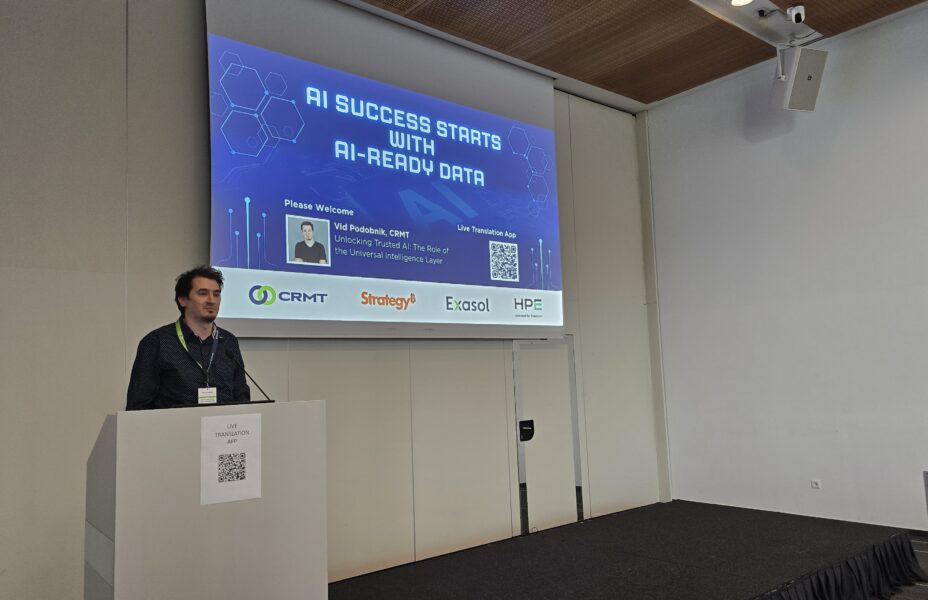
- Vid Podobnik (CRMT) demonstrated the power of the universal intelligent layer within Strategy Mosaic.
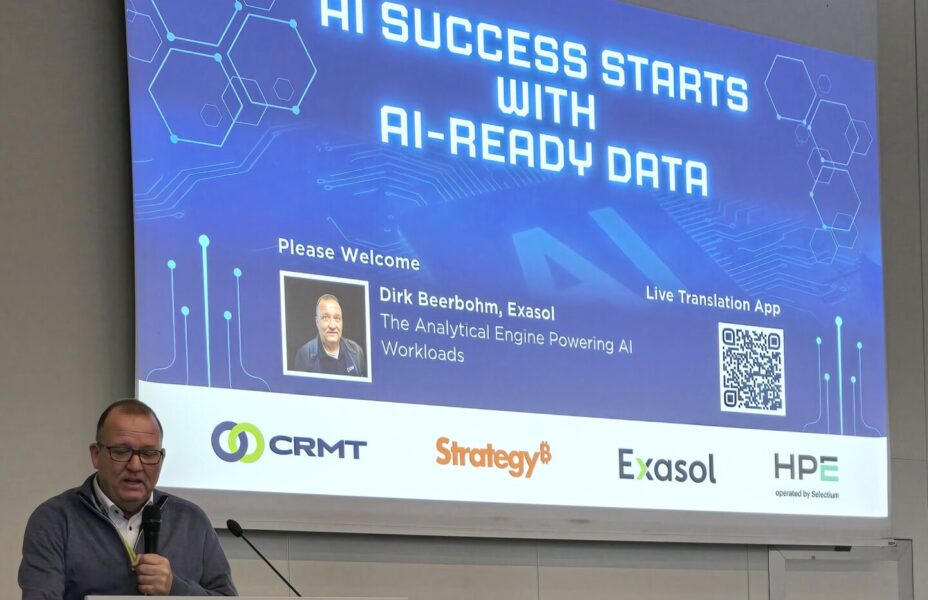
- Dirk Beerbohm (Exasol) presented how Exasol serves as a high-performance, scalable, and predictable backbone for demanding AI workloads.
- Andrej Gorenjšček (HPE, operated by Selectium) outlined how HPE solutions enable data sovereignty, AI governance, and efficient management of large-scale unstructured data.
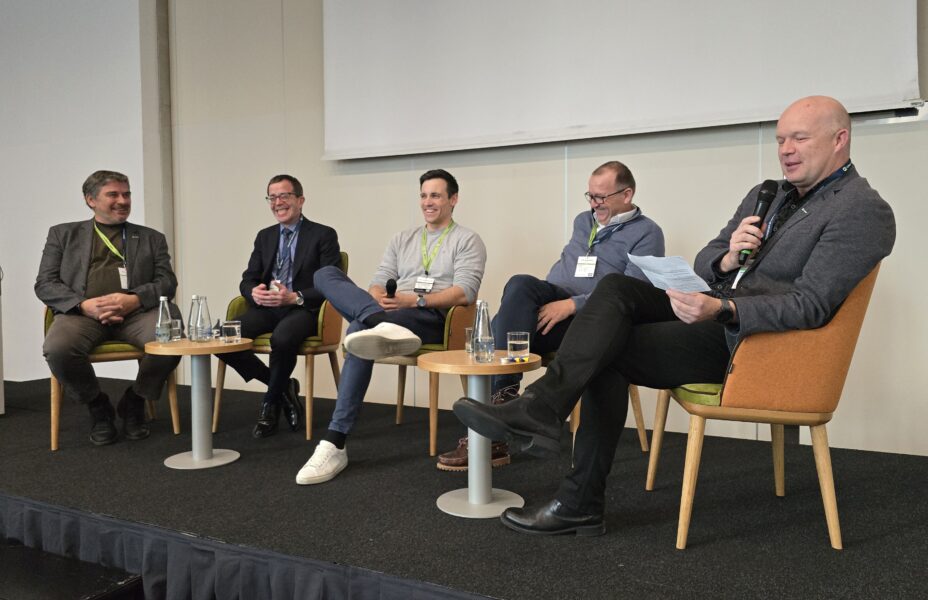
- Matej Petrovčič (CRMT) wrapped up the day by leading a panel discussion on achieving the right balance between speed, cost, and control in today’s AI-driven environment.
Throughout the sessions, one thing was clear: organisations that treat AI as a technology experiment rather than as part of an integrated data and architecture strategy will struggle to scale.
Conference Takeaways
The discussions during the day converged on a few blunt but essential messages:
- Garbage in = disaster out. Still undefeated in 2025.
If the underlying data is incomplete, inconsistent, or poorly governed, even the most advanced AI models will deliver unreliable outcomes and create business risk rather than deliver advantages. - Never fully automate anything touching an LLM without human verification. Full stop.
Large language models are powerful, but they are not infallible. For business-critical processes, a human-in-the-loop remains non-negotiable. - No bulletproof universal semantic layer = guaranteed chaos. Build it or live with the consequences.
Without a shared, governed semantic layer, metrics, definitions, and AI outputs drift across departments, leading to conflicting results and lost trust. - Data quality. Data quality. Data quality. If you have time left, focus on data quality again.
The maturity of your data quality processes ultimately determines how far you can safely scale AI, from pilot projects to enterprise-wide use.
In other words: stop experimenting on shaky ground. Fix the foundation – architecture, governance, data quality, and a robust semantic layer – or accept that AI will remain fragile, expensive, and hard to trust. These conclusions did not come from theory, but from years of real projects, real risks, and real lessons learned.
As organisations look ahead to 2026, one question becomes central: Is your data ecosystem truly ready for AI at scale?
If you want to assess where you stand today and what needs to change, get in touch with us to explore architectures and solutions that can fully support your AI-driven initiatives.