

Controlling is much more than cost monitoring. It is a management system that connects goals, processes, and people, providing leadership with the right information at the right time. At CRMT, we help organisations make controlling a solid foundation for growth, performance, and well-informed strategic decisions.
The Essence of Controlling
The concept of “controlling” was introduced to Europe in the 1970s by Albrecht Deyhle, who defined it not merely as a function but as a collaborative relationship between management and controllers. Today, controlling is recognised as a leadership function that supports organisations in setting goals, planning, and steering activities to achieve them.
Controlling ensures that managers have timely, accurate insights for better decision-making. It is not only about tracking costs but about building a goal-oriented management system.
The Role of the Controller
In practice, it is common to see individual departments meeting their own narrow objectives, while the organisation as a whole fails to achieve the expected outcomes. Without a structured controlling function, departmental goals often work against each other, resulting in inefficiencies and limited organisational impact. This is why controlling is essential. It acts as a mechanism that links corporate strategy with day to day operations and ensures that the company remains aligned to shared financial and non-financial objectives.
Why Controlling Is Essential
In many organisations, departments successfully reach their internal targets, yet the broader organisation underperforms. When controlling is not embedded as a systematic practice, departmental objectives cancel each other out and hinder overall progress. Controlling therefore plays a critical role in connecting strategic priorities with operational execution and safeguarding that the organisation consistently works toward its common goals, both financial and non financial.
Models and Processes in Controlling
The internationally recognised IGC Controlling Process Model illustrates how controlling is structured within an organisation. It distinguishes three main process groups:
- Core controlling processes: planning and forecasting, cost and investment control, monthly reporting, and business partnering.
- Main controlling processes: strategic controlling, project controlling, risk management, and data management.
- Functional controlling processes: tailored to specific business areas (e.g., procurement, production, sales controlling).
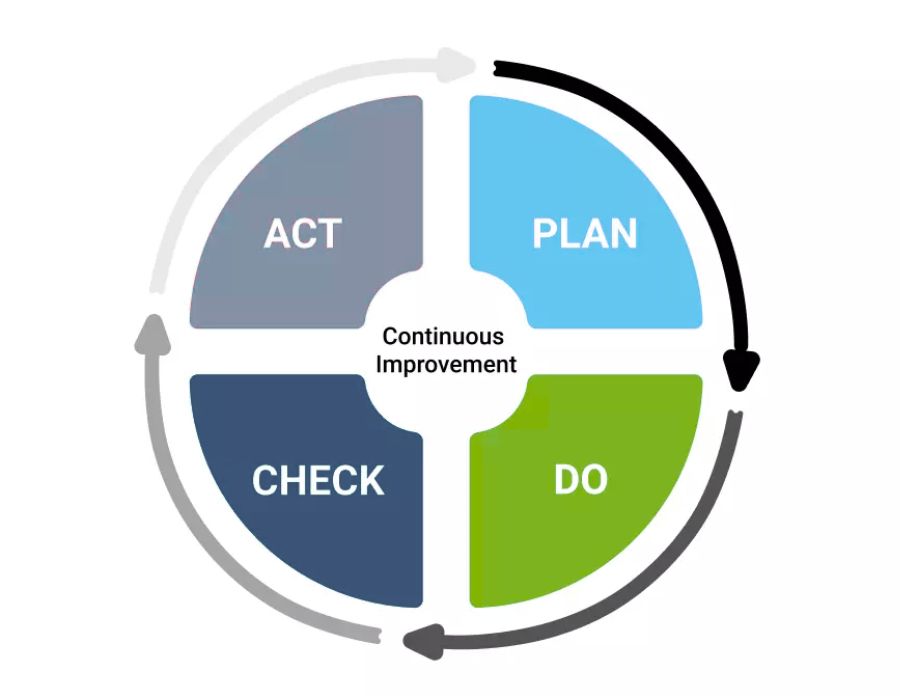
All processes follow the Deming Cycle (PDCA): Plan – Do – Check – Act. This continuous improvement approach lies at the heart of controlling.
Modern Trends – Controlling 4.0
Controlling evolves alongside business transformation. Key trends outlined by IGC and ICV include:
- Transition from fixed forecasts to agile planning
- Integration of sustainability and ESG factors
- Decentralised decision-making supported by real-time data
- Automated reporting and “information factories”
- New controller competencies—from analytics to strategic facilitation
New Competencies of the Modern Controller
Today’s controller is no longer just a numbers analyst but a business partner and change facilitator. Beyond financial expertise, controllers need interdisciplinary skills that reflect digital transformation and the fast-changing business environment.
Key competencies include:
- Analytical skills: identifying key insights from large data sets and transforming them into actionable knowledge.
- Communication and coordination: connecting people, translating complex information, and facilitating dialogue across departments.
- Business acumen: understanding value chains and the impact of decisions on overall performance.
- Integrity: maintaining trust, ethics, and transparency in supporting management decisions.
- Adaptability: embracing new methods, technologies, and agile ways of working.
The controller of the future is a data scientist, innovator, and change agent in one—helping organisations balance structure with innovation and flexibility. Equipped with tools like AI-driven forecasting, process automation, and scenario analysis, controlling becomes a true driver of business transformation and sustainable growth.
Our Philosophy
At CRMT, we view controlling as the core of corporate management. Our approach is built on three pillars:
Advisory and Implementation:
We support the modernization of controlling, from maturity assessment to full digitalization. We design systems that leverage advanced CPM and BI tools, empower business partners and controllers through individual coaching, and offer controlling as a service when needed.
Education:
Through the School of Controlling, we provide certified programs and hands-on knowledge.
Networking:
The Adriatic Controlling Conference connects controllers and managers across the region.
Controlling goes beyond numbers. It defines how a company operates, the impact it creates, and how it sustains success in the long run. For more information on modernising your controlling function, contact us.